Overview
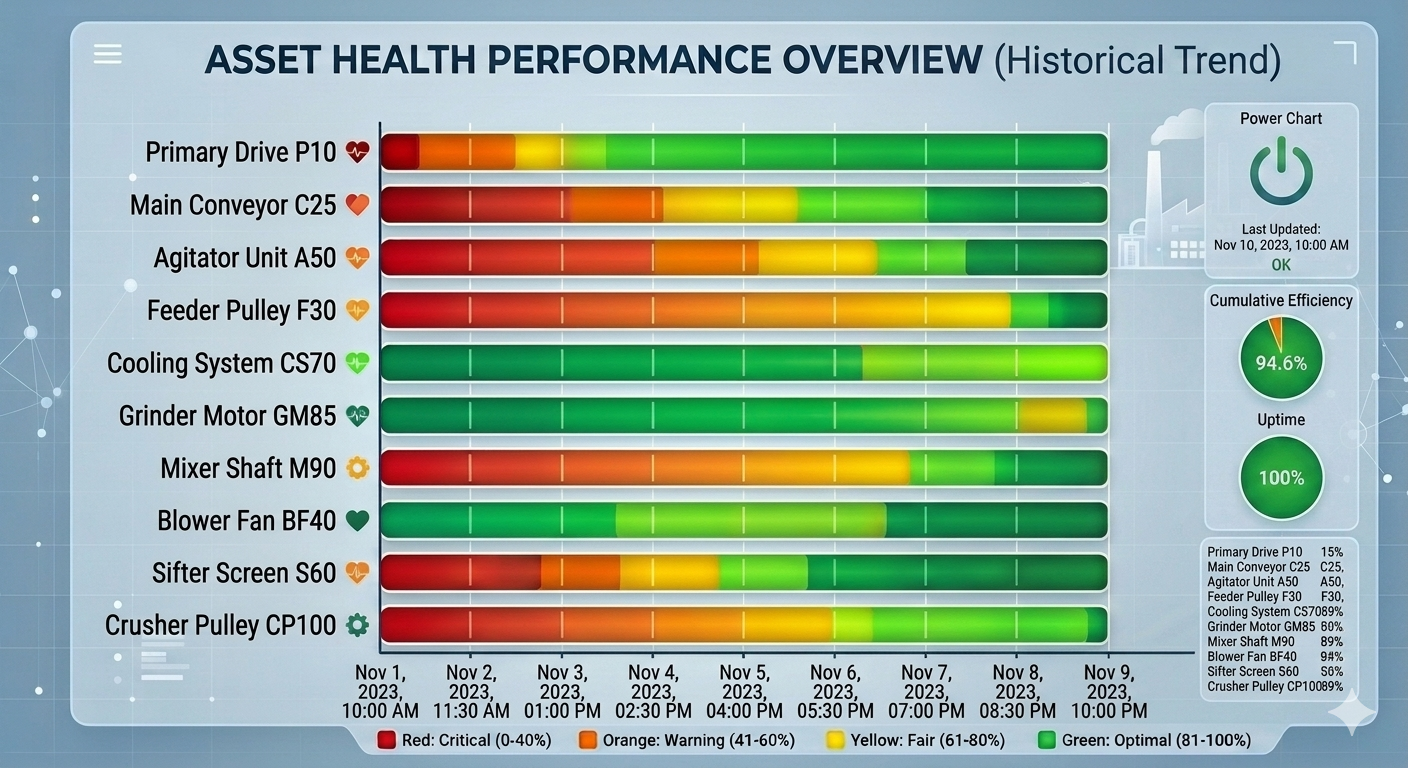
Unplanned equipment failures are one of the biggest drivers of lost production, increased costs, and operational inefficiencies. Traditional maintenance approaches —whether reactive or time-based— fail to capture early warning signals hidden in operational data.
At nilmuda, we build AI-driven predictive maintenance solutions that continuously monitor equipment health, detect anomalies, and predict failures before they occur.
Our approach combines machine learning, real-time sensor data, and historical maintenance records to deliver actionable insights directly to operations and maintenance teams.
What sets us apart
We go beyond prediction.
Our solution provides AI-powered troubleshooting recommendations—leveraging maintenance logs, manuals, and historical data to suggest likely root causes and corrective actions. This enables faster diagnosis, reduced downtime, and more efficient maintenance workflows.
Proven Results
In Drax's wood pelleting operation in Louisiana, USA, we deployed predictive monitoring on drag chain conveyors, a critical component of the production line.
- Early detection of failure patterns
- Proactive maintenance interventions
- Reduced reliance on reactive repairs
👉 Result: ~65% reduction in unplanned downtime, significantly improving production stability and throughput.
Where It Applies
Our predictive maintenance solutions are designed for asset-intensive environments, including:
- Wood Pelleting & Biomass
- Petrochemical & Refineries
- Paper & Pulp
- Food & Beverage Manufacturing
- Cement & Mining
- Steel & Metals
- Small & Mid-Sized Manufacturing Plants with critical machinery